
Seeing The Black Phone got me thinking about prevalent pop culture elements like the Hunger Games, which is centered around child murder, and how people would feel about them depending on your status as a parent. I’m not a parent, but I do plan to be one day, and I’m interested to see if my outlook on these types of stories will change, and if I will develop an aversion to them.
Objectively, the acts depicted in these types of films and novels are terrible things to witness and comprehend, but it’s only proof that the death and abuse of children have been harnessed and overused by pop culture as a method of enhancing shock factor and drawing in an audience — which, of course, is ironic, given the amounts of people (namely parents) that this type of story immediately repulses.
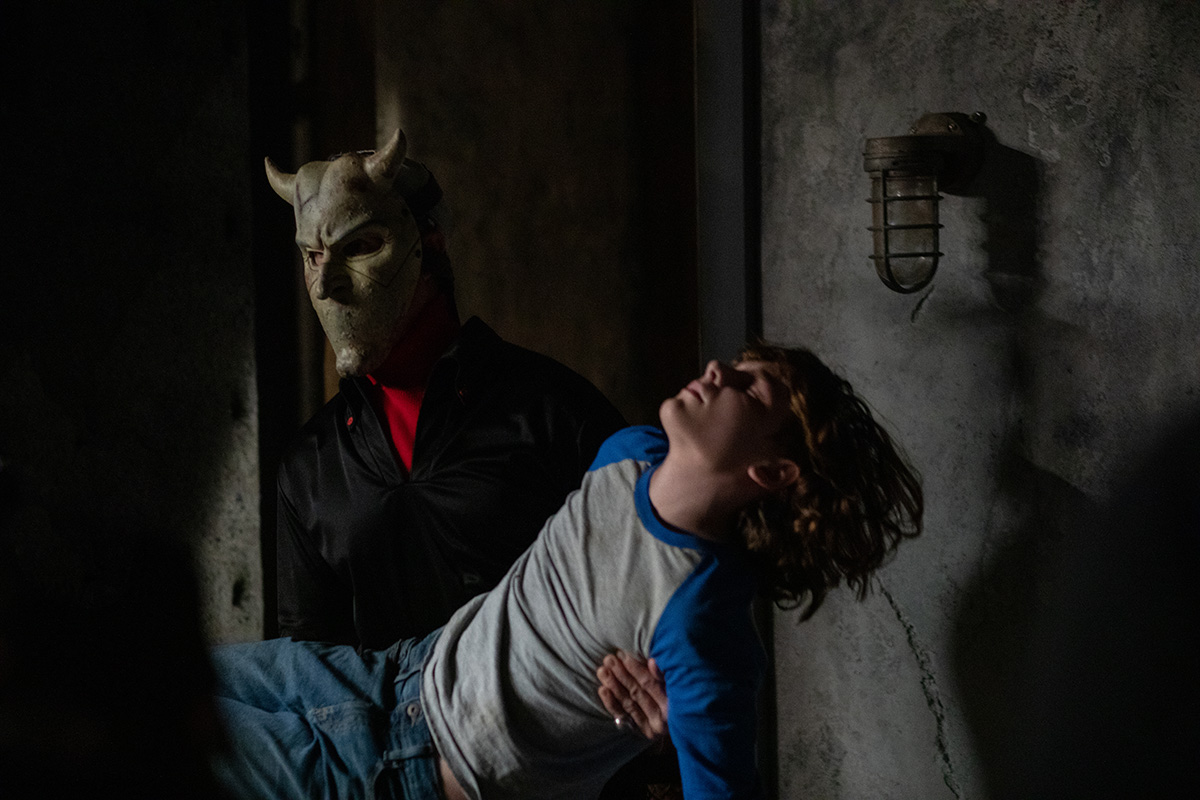 |
| Image courtesy of Universal Pictures |
